REVIEW · GRANDE TERRE ISLAND
Guided tour by electric tuk-tuk
Book on Viator →Operated by Pousse Pousse · Bookable on Viator
Pointe-à-Pitre clicks into place fast. I love the electric tuk-tuks here because they keep you moving through the city without the pollution, and the guides use what you see to explain street life, history, and monuments in a way that actually sticks. The tour feels like a guided city story told in motion, with quick, meaningful stops and just enough time at each place to know what you’re looking at. The main drawback: most stops are brief, and Memorial Acte admission is not included, so you may need extra planning for that part.
You’ll spend about 1 to 1.5 hours on the ride, in a small group capped at 6 travelers, which means it’s easy to ask questions and hear the guide clearly. Most of the key sights along the way have free admission tickets, and the format is simple: you start at 6 Quai Francois Foulon and end right back where you began, with a mobile ticket used for entry.
In This Review
- Key highlights before you go
- First Impressions: Why the Electric Tuk-Tuk Works in Pointe-à-Pitre
- Your Route in Plain English: Stops That Actually Build a Picture
- Place de la Victoire: Where the City’s Story Starts
- Saint John Perse Museum: A Colonial Residence With Island Roots
- Pointe-à-Pitre Market Moments: Spice Market and Everyday Life
- The May 1967 Fresco: When Public Art Becomes Memory
- Memorial Acte and the New Palace of Justice: Big Context, Extra Admission
- Saint-Pierre and Saint-Paul Church: Rebuilt After Fire
- Rue Frébault: The Oldest Long Street Runs the Whole Story
- Media Library (Former Town Hall): Civic Power in a New Role
- Price and Value: What You Pay for (and What You Don’t)
- The Guides Matter: Street Art With a Real Connection
- Who This Tour Fits Best
- Practical Tips: Timing, Weather, and Comfort
- Should You Book This Electric Tuk-Tuk Tour?
- FAQ
- How long is the electric tuk-tuk guided tour?
- What does the tour cost?
- Where does the tour start?
- Is Memorial Acte admission included?
- Are other stops free to enter?
- How many people are in a group?
- Do I need a ticket on my phone?
- When will I get confirmation after booking?
- Is the tour operated by electric tuk-tuks?
- Is this tour dependent on weather?
Key highlights before you go

- Electric tuk-tuks for a low-friction city circuit with guides talking the whole way
- Street art with context, not just photos of walls, guided by names you may get like Julien or Emersen
- Free-entry stops at major sights around Pointe-à-Pitre, so you can spend on what matters most
- A longer focus on Memorial Acte, with guide drop-off/pick-up, but admission not included
- Real local landmarks in a tight route, including Rue Frébault and the Saint-Pierre and Saint-Paul church
First Impressions: Why the Electric Tuk-Tuk Works in Pointe-à-Pitre

If Pointe-à-Pitre feels like a lot at first glance, this tour is a good way to fix that. A tuk-tuk lets you cover ground quickly without turning your afternoon into a long walk test. You still get close to the buildings, the street layout, and the city details, but without the constant parking and crossing-street stress.
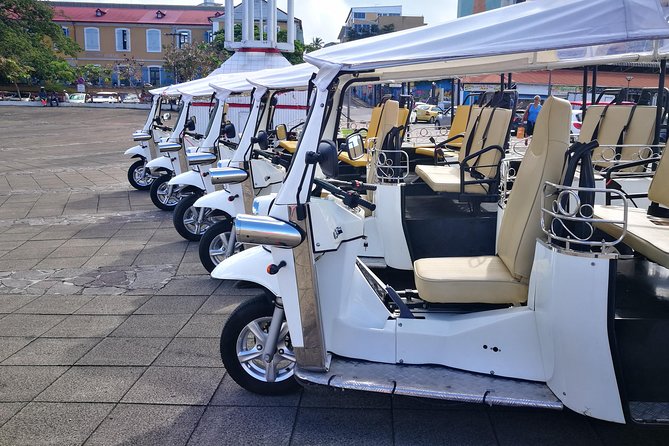
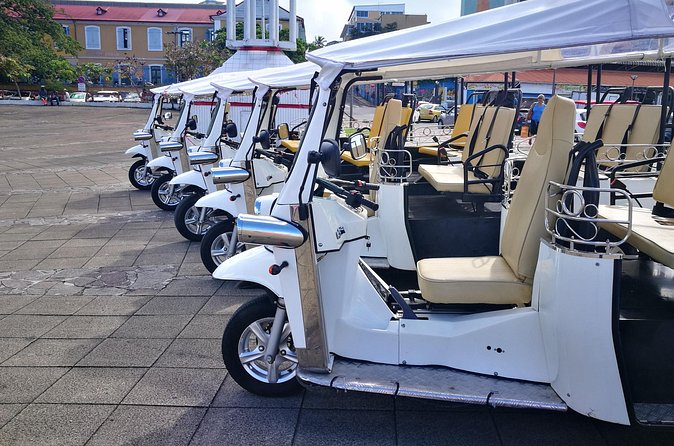
The electric part is more than a marketing line. It keeps the ride comfortable, and it matches the tour’s vibe: modern transport, old stories. Your guide drives and talks at the same time, so you don’t lose momentum. That matters in a place where the best way to understand the city is to connect what you see in one street to what you learn about the next.
I also like the small group limit. With no more than 6 travelers, you’re less likely to get stuck with half the group facing one direction while you try to hear the guide. And if you’re traveling with kids, that smaller size tends to keep the attention span from wandering.
Your Route in Plain English: Stops That Actually Build a Picture
This isn’t a “drive-by and move on” tour. It’s organized like a guided walk, just faster. Each stop adds one piece of the city’s puzzle, from symbolic squares to markets and memorial spaces.
A quick heads-up: many stops are short—think around 5 to 10 minutes at several points—so the tour is ideal if you want context and orientation, not a slow museum day. You’ll get enough time to look closely, take photos, and understand what’s significant, then roll to the next scene.
Here’s how the route comes together in a way you can feel while you’re there:
- You begin at a symbolic place tied to the city’s identity.
- You move into the historic core, where colonial architecture and early island history show up in surprising form.
- You pass through market-life and street reminders of major moments in Guadeloupe’s past.
- You end with religious and civic landmarks that help explain why the city looks the way it does today.
Place de la Victoire: Where the City’s Story Starts
Your first stop is Place de la Victoire, described as mythical by the guides. Even if you’re not a history buff, a square like this matters because it’s where a city’s identity gathers. Think of it as the opening line of the tour’s narrative.
What I like about this start is that it sets tone. The guide doesn’t just point out a location; they explain the story behind the place so you’re not just seeing a plaza. You’re learning how the city wants you to understand its own past and meaning.
And because it’s free to visit, it’s a low-cost way to get your bearings fast before you move into the more specific stops.
Saint John Perse Museum: A Colonial Residence With Island Roots
Next comes the Saint John Perse Museum, highlighted as one of the most beautiful colonial residences in Pointe-à-Pitre. That’s a strong pitch, but the useful part is how it fits the broader story: the museum is the first of its kind on the island.
In practical terms, this stop helps you connect two things:
1) architecture that signals a colonial era
2) the way that era shaped institutions and cultural memory in Guadeloupe
If you like learning to read a city visually, you’ll probably enjoy this one. You’re not just inside a building; you’re learning how the city’s early structures carried influence long after the period ended.
Pointe-à-Pitre Market Moments: Spice Market and Everyday Life

Then you get a look at the spice market, called the oldest market in Pointe-à-Pitre. Markets are where a city’s history shows up as daily routine. Even when you’re not buying anything, you’re absorbing the role of trade—what people needed, what they sold, and how neighborhoods learned to revolve around commerce.
The tour gives you a short window here, but it’s enough time to notice what makes it feel like a living place, not just a photo spot. And because admission is free, you can keep your budget focused on the parts that cost extra later.
The May 1967 Fresco: When Public Art Becomes Memory
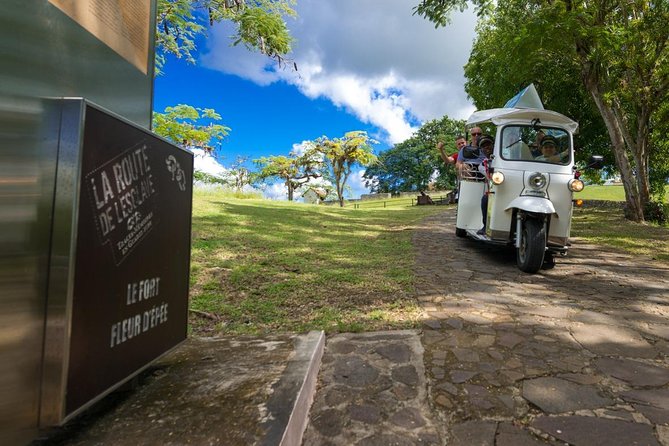
One of the stops is the fresco of May 1967, framed as a painful memory of Guadeloupe’s history. This is the kind of stop that changes how you look at public art. Instead of treating a mural like decoration, the guide ties it to what the community experienced and remembered.
I appreciate this inclusion because it keeps the tour honest. Pointe-à-Pitre isn’t only pretty streets and colonial facades. It’s also a place where major events left lasting marks in public spaces.
If you prefer your history indirect, you may find this one heavier than the market stops. But it’s also one of the most meaningful “why this city looks like it does” moments.
Memorial Acte and the New Palace of Justice: Big Context, Extra Admission
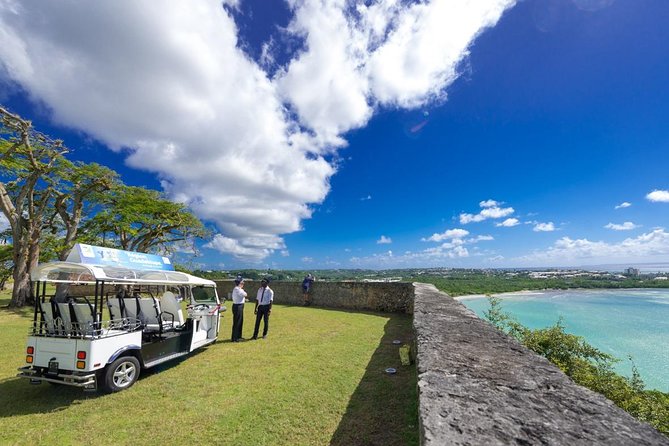
The most serious segment is Memorial Acte. Your guide can drop you off and pick you up after your tour there. Admission is not included, so if you want to do Memorial Acte fully, plan to pay separately.
The key detail the guide highlights is what’s been built and what’s replaced: the new Palace of Justice was built in place of the old prison. That single fact reframes everything. It’s not just “a museum stop.” It’s a reminder of how spaces carry power, control, and later transformation.
This is also where the tour’s small-group format helps. If you’re deciding how long to spend, your guide can work with you based on how you’re feeling in the moment.
Saint-Pierre and Saint-Paul Church: Rebuilt After Fire
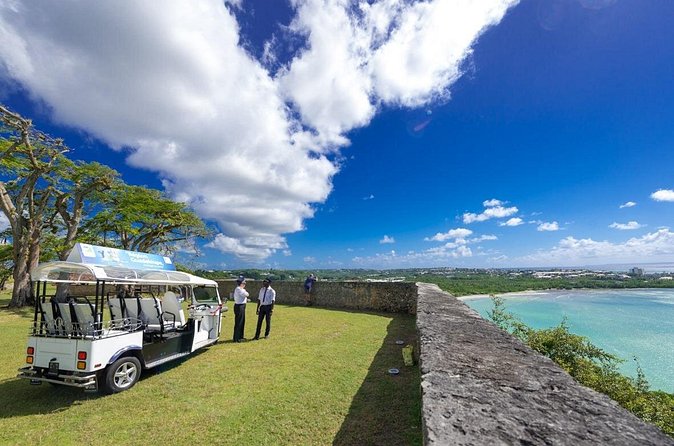
Next up is the Catholic Church of Saint-Pierre and Saint-Paul. It was rebuilt after a huge fire ravaged the city. That’s not just a trivia point. Rebuilding after disaster often shapes architecture, neighborhood life, and even what locals choose to preserve.
What I like here is the emotional arc. The tour has already touched market life and difficult historical memory. This church stop adds another layer: survival, reconstruction, and continuity.
Again, admission is free for this stop, which makes it an easy win if you want a quick look at religious architecture without adding cost.
Rue Frébault: The Oldest Long Street Runs the Whole Story
Then you move along Rue Frébault, described as the longest and oldest in the city. Streets like this are where time stacks up. Even without stepping inside anything, you can tell a lot from street length, building rhythm, and how people move along the corridor.
If you’re a “walk the city with your eyes” traveler, you’ll enjoy this section. It’s the kind of moment where you start understanding the city’s logic: which areas hold history longer, and how older routes continue to matter.
And because this part of the tour is guided, you’re not stuck guessing. The guide ties Rue Frébault back into the city’s larger narrative.
Media Library (Former Town Hall): Civic Power in a New Role
Finally, you’ll pass the media library, noted as the former Town Hall of Pointe-à-Pitre. This is a neat reminder that civic spaces change function, not importance.
I like the idea of ending with this. After the memorial and the churches and the streets, you land on something practical and modern: a place for information and media. It gives the tour a “then and now” feel without making it feel forced.
This kind of stop works especially well if you like seeing how cities repurpose buildings. It also gives you a clearer sense of why Pointe-à-Pitre feels both historic and lived-in.
Price and Value: What You Pay for (and What You Don’t)
The tour costs $53.74 per person for about 1 to 1.5 hours. For that price, you’re paying for three main things:
- a guided interpretation of multiple key sights in a small group
- electric tuk-tuk transport that keeps you moving efficiently
- free-entry stops at many locations, so you’re not constantly adding ticket costs
The one cost wrinkle is Memorial Acte admission not included. That doesn’t ruin the value, but it’s the one thing you should plan for so there are no surprises when you reach the most important stop.
You’ll likely feel this is good value if you want orientation plus context. If you’re someone who prefers to spend hours inside museums and read every label, this may feel fast. But if you want your first taste of Pointe-à-Pitre with a guide who understands how stories connect, it’s a strong deal.
The Guides Matter: Street Art With a Real Connection
The strongest praise from past experiences is about the guides’ ability to make this feel personal and lively. You might end up with someone like Julien, who’s described as excellent for families, mixing street art perspectives with historical and sociological points. Another name you could see is Emersen, noted for steering the group to genuinely interesting street art spots.
Here’s why that matters for you: street art can be hit-or-miss on tours. Sometimes it turns into quick photo stops. On this route, the guides use it as a way to talk about the city’s identity and social memory. That’s what turns a mural pass into something you can actually interpret later.
Who This Tour Fits Best
I’d book this if any of these sound like you:
- You want a first-day orientation in Pointe-à-Pitre without walking nonstop
- You like history explained through street-level observation
- You’re traveling with kids or a mixed-age group and need a pace that holds attention
- You care about meaningful memorial context, not only pretty landmarks
- You enjoy street art tours when they come with background you can understand
It may not be the best choice if you want deep museum time at every stop, since several points are intentionally brief. It’s also best saved for a day when you’re not rushed, so the tour tempo feels like a benefit, not a clock.
Practical Tips: Timing, Weather, and Comfort
This experience runs best in good weather, since it’s outdoors and on a tuk-tuk route. If conditions look rough, the provider may offer another date or a full refund. I’d plan around this like you would for any short-city driving tour.
Also, bring the mindset that this is a guided circuit. You’ll get a lot of seeing in a short time. If you want to linger, you’ll do it at the places where the tour gives extra space, like the Memorial Acte segment where the guide can pick you up after your visit.
Finally, keep an eye on the free vs. not included part. Most stops are free entry, but Memorial Acte isn’t. If you care about a fully timed museum experience there, decide in advance so you don’t feel rushed.
Should You Book This Electric Tuk-Tuk Tour?
Yes, you should book it if you want an efficient, small-group way to understand Pointe-à-Pitre fast, with electric comfort and a guide who connects what you see to what it means. It’s especially worth it for anyone who likes street art when it’s paired with history and social context.
Skip it only if you need lots of independent time inside museums, or if you’re the type who dislikes having a budget add-on at the most important stop. If you can accept that Memorial Acte admission is extra and that several stops are brief, this tour is a smart value.
FAQ
How long is the electric tuk-tuk guided tour?
It lasts about 1 hour to 1 hour 30 minutes.
What does the tour cost?
The price is $53.74 per person.
Where does the tour start?
It starts at 6 Quai Francois Foulon, Pointe-à-Pitre 97110, Guadeloupe.
Is Memorial Acte admission included?
No, admission to Memorial Acte is not included.
Are other stops free to enter?
The provided info lists free admission for several stops along the route.
How many people are in a group?
The tour has a maximum of 6 travelers.
Do I need a ticket on my phone?
Yes, it uses a mobile ticket.
When will I get confirmation after booking?
Confirmation is received within 48 hours of booking, subject to availability.
Is the tour operated by electric tuk-tuks?
Yes, you ride on electric tuk-tuks driven by the guides.
Is this tour dependent on weather?
Yes, it requires good weather. If it’s canceled due to poor weather, you’ll be offered a different date or a full refund.