REVIEW · FLORENCE
Florence: Guided City Tour by Rickshaw
Book on GetYourGuide →Operated by Velotourflorence · Bookable on GetYourGuide
Florence has a lot of streets that don’t play nice for walking. This guided rickshaw tour is an easy way to see the big sights fast, while a local guide explains what you’re actually looking at. I especially like the way the driver gets you close to landmarks so you can see the details without burning your feet.
Two things I really like: the history told by a live local guide (I heard firsthand how guides like Stefano and Ivan make the city feel personal), and the built-in focus on photo viewpoints instead of just passing by. One consideration: if you’re hoping for a slow, stop-at-every-corner “wandering” style tour, the 1–1.5 hour format may feel a bit fast.
In This Review
- Key Points Before You Go
- Why This Rickshaw Tour Works for First-Time Florence
- Your Route: Duomo Square, Signoria, the Arno, and Repubblic Square
- Duomo Square and the Santa Maria del Fiore Complex
- San Firenze Square, Bargello-area details, and San Filippo Neri
- Borgo dei Greci: the leather neighborhood feel
- Santa Croce and the South-City perspective
- The Medieval Area: older Florence, still visible
- Signoria Square, Palazzo Vecchio, and Uffizi area
- Arno River and Ponte Vecchio angles
- Tornabuoni Street and Repubblic Square
- What You’re Actually Learning From a Local Guide
- Photo Stops Without the Foot Traffic Headache
- Comfort in Real Florence: Rain, Narrow Streets, and Getting Close
- Churches and Buildings: When Ticket-Free Access Helps
- Private Group Feel and Personalized Attention
- Price and Value for $44.41: What You’re Paying For
- Who Should Book This Rickshaw Tour (and Who Might Skip It)
- Should You Book This Florence Rickshaw Tour?
- FAQ
- How long is the Florence rickshaw tour?
- Where do we meet for the tour?
- What are the main sights included?
- What languages are available for the guide?
- Is the tour wheelchair accessible?
- What is included besides the rickshaw ride?
- Is cancellation free, and can I pay later?
Key Points Before You Go
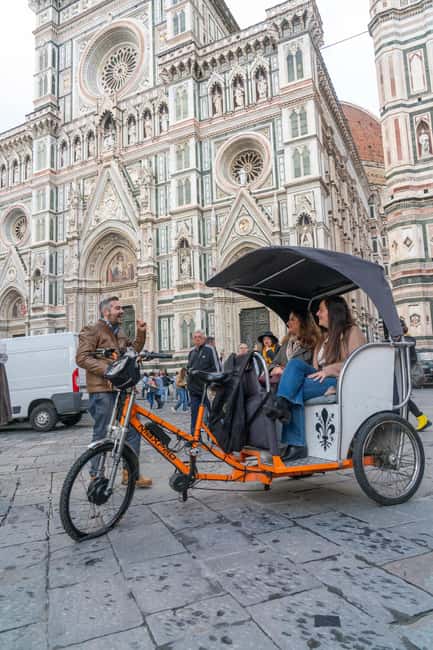
- No-stress way to cover central Florence when the streets are tight and steep
- Live guiding in multiple languages plus an audio guide if you want it
- Photo-friendly stops at the Duomo complex, Signoria Square, and Ponte Vecchio
- You can enter some churches/buildings without tickets (where allowed)
- Comfort beats foot travel, including covered protection for sun or rain
- Meet in Republic Square and get dropped back where you started
Why This Rickshaw Tour Works for First-Time Florence
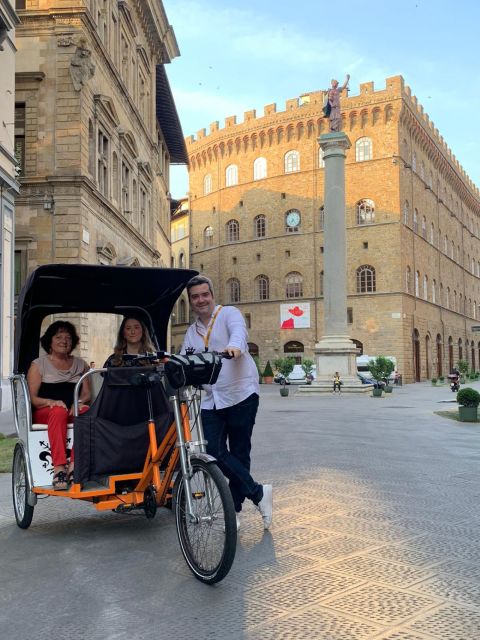
Florence can be a shock on day one. You’ll get dazzled by the Duomo, then instantly realize you’re going to walk a lot just to connect the dots. This rickshaw tour solves that problem in the most practical way: you sit back, the licensed local guide drives, and you move through areas that are awkward or time-consuming on foot.
What makes it work is not just the vehicle. It’s the pacing. You get a compact route through the historic center—main squares, the river, and the shopping streets—so you can orient yourself before you start your own exploring. If you plan to come back later for museums or churches, this kind of overview is the shortcut.
And unlike a “drive-by” tour, you’re not just looking out at scenery. You’re hearing the story of the city from someone who knows the streets, the monuments, and the context.
Your Route: Duomo Square, Signoria, the Arno, and Repubblic Square
The tour covers the highlights you came to Florence for, but it also threads them together in a way that helps the city make sense. Expect stops around these famous places:
Duomo Square and the Santa Maria del Fiore Complex
You’ll start with the Duomo area—Santa Maria del Fiore, the Baptistery, Giotto’s Bell Tower, and the Brunelleschi Dome. This stop is the “reset moment” for many first-timers: once you see the whole complex as a unit, the rest of Florence clicks. The rickshaw setup also helps because you can position for photos without needing to fight for space the way you would on foot.
A practical note: you’ll spend time seeing and photographing, but the key is that you’re getting the overview first—so you don’t later feel like you missed the point.
San Firenze Square, Bargello-area details, and San Filippo Neri
Next you’ll head toward San Firenze Square, where you’ll get close to spots tied to Florence’s cultural and civic life—Bargello Museum, Gondi’s Palace, and the Complex of San Filippo Neri. Even if you don’t plan to enter everything, this is where the city’s “layers” show up. Florence isn’t one era; it’s a stack.
If you like architecture and stories that explain why a place matters, this is a strong section. The guide’s job here is to connect the buildings to the bigger narrative.
Borgo dei Greci: the leather neighborhood feel
You’ll also pass through Borgo dei Greci, a well-known leather area. This stop isn’t only about the landmark—it’s about understanding what kept Florence running beyond art and cathedrals. A good guide will help you see the neighborhood as a working piece of the city, not just a name on a map.
Santa Croce and the South-City perspective
The route includes Santa Croce, one of Florence’s most famous churches. This area works well on a rickshaw because the streets can be busy and the walking can add up fast. Santa Croce gives you another anchor point so you can later return with intent—either to explore inside or to plan a longer stop on a separate day.
The Medieval Area: older Florence, still visible
You’ll visit the Medieval Area, described as the oldest part of the city still conserved. This is where the guide can make the urban form feel real—narrow street patterns, historic blocks, and the sense that you’re walking through a place that has survived centuries with its shape largely intact.
On a tight schedule, this kind of “early Florence” glimpse is more useful than trying to cram it all into a museum you can’t fully process.
Signoria Square, Palazzo Vecchio, and Uffizi area
Then comes Signoria Square with Palazzo Vecchio and the Uffizi Gallery area. This is classic Florence: civic power in stone, and art all around you even before you step into museums. The rickshaw helps you see the square as a space—where you can stand, where the buildings sit, and how crowds move.
If you’re an art-lover, this is also the moment to decide what you want to prioritize later. Seeing the square first makes your museum choices easier.
Arno River and Ponte Vecchio angles
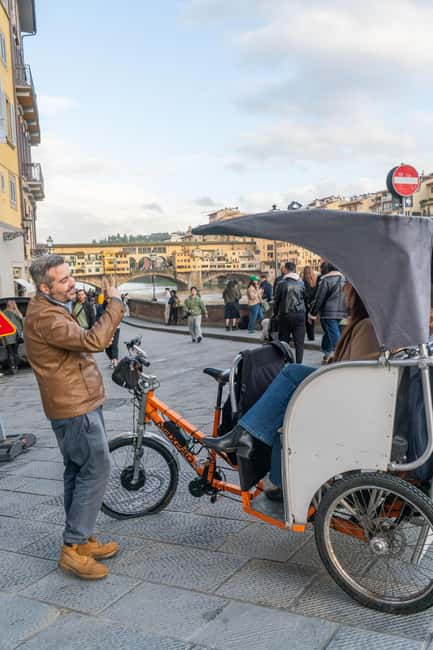
One of the most memorable parts is the Arno River section and Ponte Vecchio. This is one of those “only Florence” views. The big advantage of the guided rickshaw here is timing and access: you can reach good angles without making your entire day about walking from viewpoint to viewpoint.
If you’re after photos, this is where you’ll understand why the tour is designed for camera moments, not just sightseeing checklists.
Tornabuoni Street and Repubblic Square
You’ll also pass through Tornabuoni Street, known as an important fashion shopping area, and finish at/around Repubblic Square, the center of Florence. Tornabuoni gives you a contrast—Florence as a living city with commerce and modern life layered onto the old core.
Finishing back near Repubblic Square is handy because it keeps you close to the action. You can continue exploring immediately after.
What You’re Actually Learning From a Local Guide
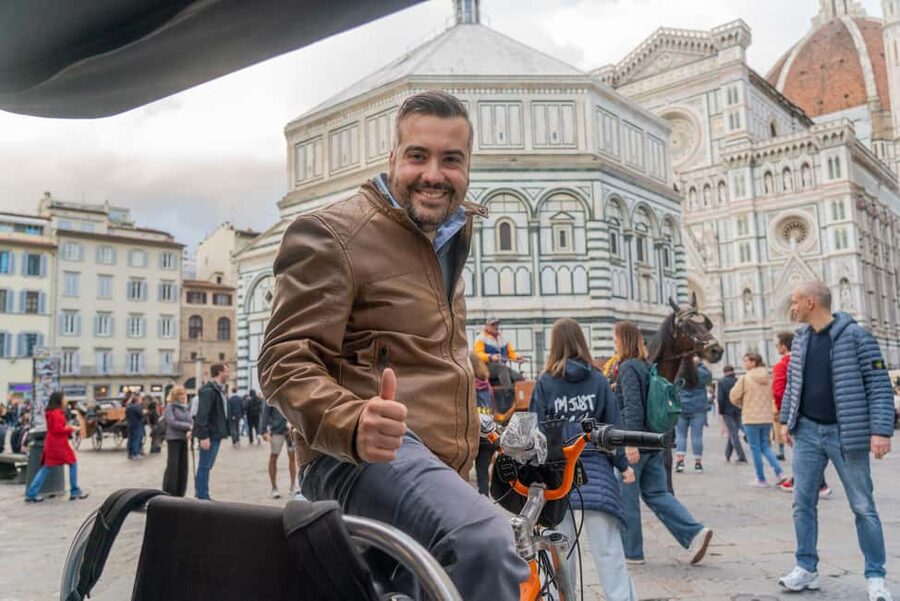
The heart of this experience is the live narration. You’re not listening to a generic script. You’re hearing Florence explained like it belongs to someone’s family—because for guides like Stefano and Ivan, it clearly does.
What stood out in the guide approach: they tell stories tied to the architecture and the roles of the buildings. In practical terms, that means you’re less likely to walk away knowing the name of a monument but not why it matters. Instead, you get a usable mental map.
Here’s how that helps you as a traveler:
- You understand the city structure faster, so you don’t waste time later figuring out where things are in relation to each other.
- You’ll recognize details when you return on your own—so a second visit becomes more fun, not repetitive.
- You can ask questions while you’re moving, and the guide can point you toward what’s worth your time.
Also, the tour includes a multi-language audio guide (English, Spanish, French, German, Portuguese, Polish, Hebrew, Danish, Russian, Dutch). If you prefer following along with an audio layer or want to catch parts in another language, that option is there.
Photo Stops Without the Foot Traffic Headache
Florence can be a camera challenge. Narrow streets pack in people, and everyone suddenly wants the same angle. This rickshaw tour is set up around that reality by building in best corners to do wonderful pictures.
A big plus is the positioning. Because you’re on a rickshaw, you can often pause where you can compose shots cleanly—especially around squares and viewpoints like the Duomo complex area and the Ponte Vecchio corridor.
The other photo advantage is speed. When you only have a day (or one evening), you don’t want to spend it searching for “the perfect photo spot.” This tour’s purpose is to get you to several of those spots quickly, with a guide handling the movement.
If you want the photos and the story, this format is efficient in a way walking alone often isn’t.
Comfort in Real Florence: Rain, Narrow Streets, and Getting Close
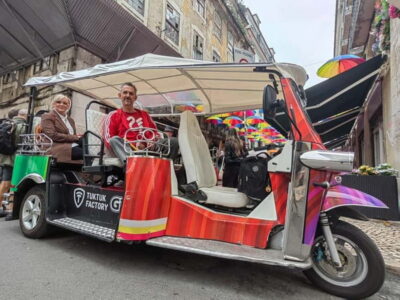
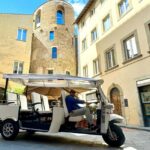
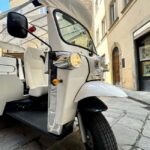
The rickshaw is the point, but comfort is what makes it enjoyable. You’re traveling through tight, winding parts of Florence that cars can’t access easily. On a rickshaw, you can go where you’d struggle on foot—while still getting close to landmarks.
Weather matters in Tuscany. One of the strongest themes I picked up from the experience is how guides respond when it rains. You may get rain covers, and guides also check in so you feel supported rather than rushed. This matters because Florence weather can change quickly, and you don’t want your “must-do” day turned into a wet slog.
Cold can matter too. On a December visit, one guide had a blanket available, which is a small detail but a big deal when the sun drops and you’re still moving.
Practical tip: bring a camera strap or secure phone plan for moving around. Even when the ride is stable, you’ll likely take a lot of photos at stops.
Churches and Buildings: When Ticket-Free Access Helps
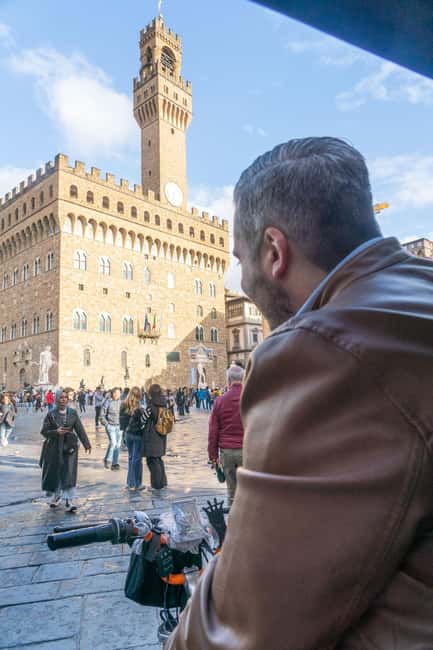
This tour notes a possibility to enter in churches/buildings that has no tickets. That can be a real value add, because it shifts the experience from only seeing sights from the street to experiencing a bit more on the inside.
That said, you should think of it as opportunistic rather than guaranteed everywhere. Some sites require tickets or have timed entry, and access can vary. The tour gives you the best chance to step into what’s available without needing to pre-plan that extra cost.
If you love cathedrals and want at least one “inside moment” during your orientation, this is a helpful feature.
Private Group Feel and Personalized Attention
This is listed as a private group, which usually means you get a more flexible, personal experience than a big shared group. In practice, that often shows up in the way guides can adjust pacing, tailor explanations to your questions, and help you get the best viewing spots without feeling boxed in.
If you’re traveling as a couple, with older family members, or just want a quieter experience, the private format can make the tour feel more like a local host walking you around—not a production line.
It’s also useful when schedules get messy. There’s a theme of guides being attentive about pickup and making adjustments if timing shifts (for example, meeting closer to where you are within the historic center).
Price and Value for $44.41: What You’re Paying For
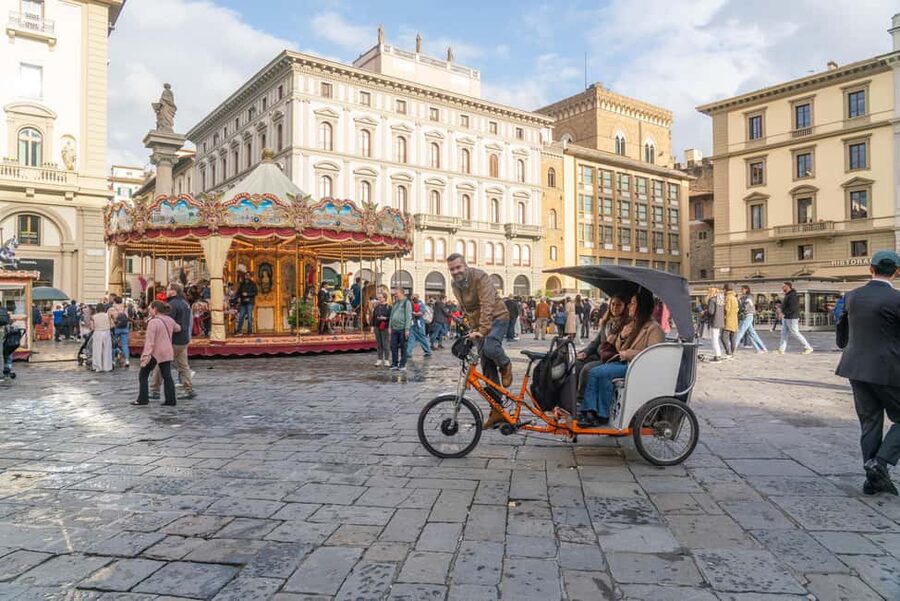
At $44.41 per person for about 1 to 1.5 hours, the value comes from three things you’d otherwise pay for separately: time, guidance, and transport that gets you close.
Walking Florence is free, of course. The issue is opportunity cost. If you have limited time, every hour you spend trudging between viewpoints is an hour you can’t spend actually enjoying museums, dinners, and longer stops.
You’re paying for:
- A licensed local guide explaining what you’re seeing
- A comfortable rickshaw ride that reduces strain
- Efficient coverage of major sights across central Florence
- Photo positioning and potentially some church/building entry without tickets
If you’re the type of traveler who likes to understand before you explore, this is money well spent. If you only want a casual stroll with no interest in context, you might get less out of it.
Who Should Book This Rickshaw Tour (and Who Might Skip It)
This tour is a great match if:
- it’s your first time in Florence and you want a fast orientation
- you want to see key landmarks without turning the day into a leg-burning exercise
- you prefer a guide who tells stories tied to buildings and streets
- you’re traveling with mobility limits, seniors, or anyone who’d rather rest than walk
You might skip it if:
- you already know Florence well and just want to pick one site for a deep, long visit
- your schedule allows you to walk comfortably and you don’t care about a guided overview
Given the way guides handle rain and the focus on comfort, it’s also a strong backup plan on a weather day.
Should You Book This Florence Rickshaw Tour?
I’d book this when you want Florence to make sense quickly. It’s a smart first-day move: you get the skyline icons, the civic squares, the river postcard, and the shopping street rhythm, all without turning it into a full marathon.
If your trip includes at least one day where you’ll be tired from walking (or you’re traveling with someone who gets tired faster), the rickshaw format is the difference between seeing Florence and feeling Florence.
One final thought: do this early enough that you can use it. After the tour, you’ll be able to choose what to return to with intention—Duomo details, Uffizi area, Santa Croce, or simply wandering the Medieval streets you now understand.
FAQ
How long is the Florence rickshaw tour?
The duration is listed as 1 to 1.5 hours, and starting times depend on availability.
Where do we meet for the tour?
Meet in Republic Square, in front of the column, close to the carousel. The tour ends back at the meeting point.
What are the main sights included?
You’ll see major highlights including Duomo Square, San Firenze Square, Borgo dei Greci, Santa Croce, the Medieval Area, Signoria Square (with Palazzo Vecchio and the Uffizi area), the Arno River and Ponte Vecchio, Tornabuoni Street, and Repubblic Square.
What languages are available for the guide?
The live tour guide languages are English, Spanish, and Italian. An audio guide is included in multiple languages, including English, Spanish, French, German, Portuguese, Polish, Hebrew, Danish, Russian, and Dutch.
Is the tour wheelchair accessible?
Yes, it is listed as wheelchair accessible.
What is included besides the rickshaw ride?
Included items are the meeting point where you prefer, a local tourist guide, the comfortable rickshaw, best photo corners, and the possibility to enter some churches/buildings that have no tickets.
Is cancellation free, and can I pay later?
Yes. You can cancel up to 24 hours in advance for a full refund. You can also reserve now and pay later.