REVIEW · BUDAPEST
Budapest Private Tuk Tuk Half-Day Tour
Book on Viator →Operated by Budapest TukTuk · Bookable on Viator
Budapest on a tuk-tuk is a fast, friendly way to get your bearings without fighting traffic on foot. You’ll cover big-name landmarks—think St. Stephen’s Basilica, Heroes’ Square, the Jewish Quarter, Buda Castle views, and the Danube—while a private guide explains what you’re seeing and keeps the pace in your control.
I love how this tour feels built for real tourists: you get a private ride (no crowds), and you’re close to viewpoints in spots regular buses and cars struggle to reach. I also like that guides bring personality, stories, and photo help—if you’re lucky enough to get someone like Zoltán, Greg, Norbert, Paul, or Martin, you can expect a lively mix of history and humor. One possible drawback: tuk-tuk rides can be a bit jarring, and a few people have said audio was hard to hear, so if you’re sensitive to vibration or sound, plan accordingly.
In This Review
- Key things to know before you book this tuk-tuk ride
- Why this tuk-tuk works for a first-time Budapest day
- What you’ll see on the Pest side: basilica, boulevard, and Heroes’ Square
- St. Stephen’s Basilica and the story behind its relic
- Andrássy Avenue, with its World Heritage swagger
- Hungarian State Opera House exterior moment
- Heroes’ Square: Hungary’s leaders in stone
- Jewish Quarter and food-market vibe: synagogues, squares, and street atmosphere
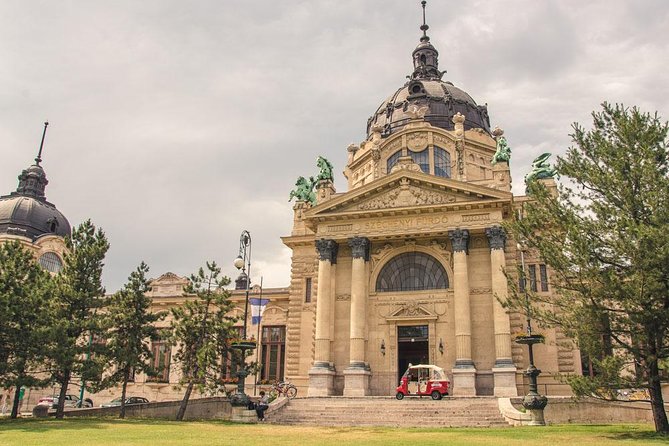
- Széchenyi Medicinal Bath area and thermal-bath context
- The Dohány Street Synagogue stop: largest in Europe, 3,000 seats
- Károlyi Garden and the calm break between busy streets
- University Church area and the student-city rhythm
- Kálvin tér and the Great Market Hall for everyday Budapest flavor
- Danube crossings: Liberty Bridge, Gellért Hill viewpoints, and the Shoes memorial
- Liberty Bridge and the bridge name you can remember
- Gellért Hill area and the thermal-bath zone at Hotel Gellért
- Citadella and the Freedom Statue viewpoints
- Garden of Philosophy: a calmer viewpoint with a symbolic angle
- Shoes on the Danube Bank: history you can’t ignore
- Castle District highlights: Fisherman’s Bastion, Matthias Church, and Castle Hill
- Castle Hill: UNESCO plateau and the thermal cave network
- Fisherman’s Bastion: neo styles and viewpoint payoffs
- Matthias Church: tradition, style, and the limits of archaeology
- How the “private” part feels: pacing, photos, and group size math
- Expect lots of photo moments (and ask for them)
- Comfort: blankets can help, but vibrations are real
- Flexibility is the real perk
- Price and value: is $178.98 per person worth it?
- Should you book this Budapest Private Tuk Tuk Half-Day Tour?
- FAQ
- FAQ
- How long is the Budapest Private Tuk Tuk Half-Day Tour?
- Is the tour private?
- Do I get pickup and drop-off?
- Is the guide available in English?
- Are admission tickets included?
- Do I get to choose the departure time?
- Is a Danube sightseeing cruise included?
- What happens if the weather is bad?
- How many people fit in one tuk-tuk?
Key things to know before you book this tuk-tuk ride
- Private comfort with the right kind of speed: enough time to see major districts without cramming in too many long walks
- Buda + Pest in one half-day loop: basilicas, bridges, synagogue exterior areas, and Castle District viewpoints
- Stops are mostly outside: you’ll look, take photos, and learn—entry tickets aren’t included
- Guides often go the extra mile: photo-taking help and easygoing pacing show up in the strongest reviews
- If you need a winter layer, you might be set: some departures include blankets for chilly weather
- The ride can be bumpy: if you have a bad back or sound sensitivity, sit where you feel most comfortable
Why this tuk-tuk works for a first-time Budapest day
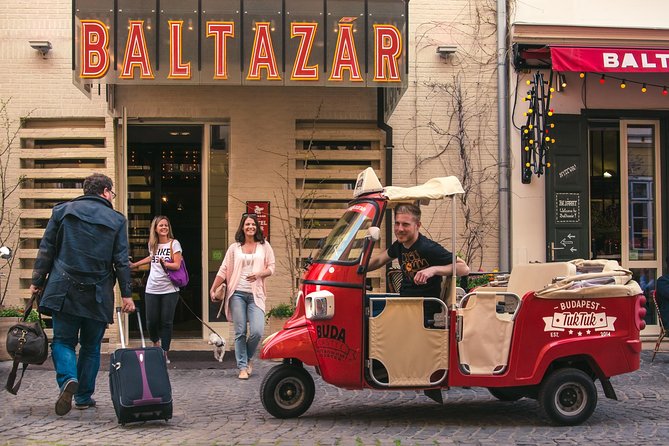
Budapest is one of those cities where the distance is real. Between grand squares, wide boulevards, and the Danube separating Buda and Pest, walking all day can turn into a stress test. This tour solves that with a simple formula: you get transported seat-first, while your guide points out what matters and why.
The “half-day” length is also a smart match for how most trips actually go. You can do this on your first full day to orient yourself fast, then come back later with a plan—whether that means Jewish Quarter streets, thermal baths, or one of the big museums. Private also helps: you can linger at a viewpoint, skip a stop that doesn’t spark your interest, and generally keep the day from feeling like a checklist.
What you’ll see on the Pest side: basilica, boulevard, and Heroes’ Square
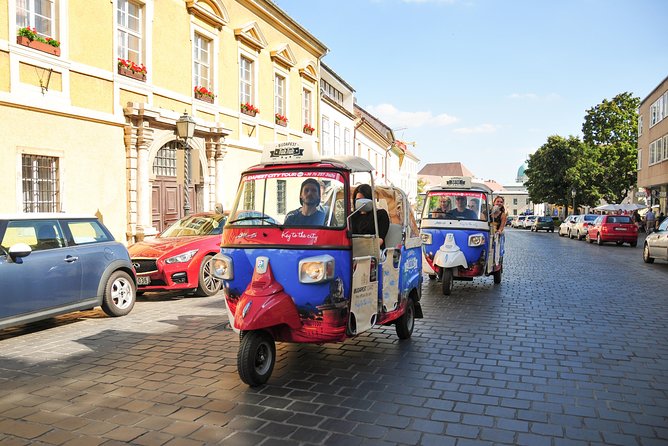
Even if you’re only in Budapest for a short time, the Pest section gives you the city’s big “here we are” moments.
St. Stephen’s Basilica and the story behind its relic
You’ll stop at St. Stephen’s Basilica, named for Stephen, the first king of Hungary. The famous detail here is the reliquary believed to house Stephen’s right hand—small physical object, huge symbolic weight. The basilica was also once among the largest church buildings in Hungary before 1920, so it’s worth stepping back and letting the scale land.
Watch-outs: this stop is mainly about seeing the exterior and soaking in the setting. If you’re hoping for a long interior visit, you’ll want to add it separately since entry tickets aren’t included.
Andrássy Avenue, with its World Heritage swagger
Next comes Andrássy Avenue, a boulevard dating to 1872 and recognized as a World Heritage Site in 2002. It’s lined with impressive Neo-renaissance mansions and townhouses—exactly the kind of architectural “snap” that makes Budapest feel grand even before you learn the deeper layers.
A good guide will help you notice what’s easy to miss at tuk-tuk speed: details on façades, the rhythm of the street, and why this avenue matters historically. If you’ve got a camera, ask for a few quick photo stops here—short pauses pay off.
Hungarian State Opera House exterior moment
You’ll also see the Hungarian State Opera House on Andrássy út. Designed by Miklós Ybl (a major Hungarian architect), it’s known as a neo-renaissance landmark. Even outside, the building gives you a sense of how Budapest ties arts and national identity together.
Again: mostly exterior time, so think of it as a “spot it, understand it, move on” kind of stop.
Heroes’ Square: Hungary’s leaders in stone
Heroes’ Square is one of the city’s headline squares, built around a statue complex featuring the Seven chieftains of the Magyars and other major national leaders. At one end sits the Memorial Stone of Heroes, often (and incorrectly) called the Tomb of the Unknown Soldier—your guide should help you sort the names and meanings.
This stop is short (about 15 minutes), so I treat it like a photo-and-context stop: take pictures, then use your guide’s explanation to connect it to the rest of the day.
Jewish Quarter and food-market vibe: synagogues, squares, and street atmosphere
One of the best parts of this tour is that it doesn’t keep things “pretty only.” It moves through districts with real cultural weight, including areas tied to the Orthodox Jewish community and broader Jewish history.
Széchenyi Medicinal Bath area and thermal-bath context
You’ll pass the area associated with Széchenyi Medicinal Bath, described as the largest medicinal bath in Europe. The thermal springs supply water at 74°C / 77°C—warm enough to explain why Budapest’s bath culture is such a big deal. Even if you don’t soak today, seeing the bath complex context helps when you later choose which baths to try.
No long soak is built into the ride. It’s a look-and-learn moment, not a “spend hours in water” plan.
The Dohány Street Synagogue stop: largest in Europe, 3,000 seats
The highlight here is the Dohány Street Synagogue (the Great Synagogue). It’s described as the largest synagogue in Europe, seating about 3,000 people, and a center of Neolog Judaism. Even if you don’t go inside, the exterior stop gives you a strong sense of scale and importance.
Reality check: if interior access matters to you, you’ll need to plan that separately because entry tickets aren’t included.
Károlyi Garden and the calm break between busy streets
You’ll also see Károlyi Garden, a public park in the 5th district and one of the oldest remaining palace gardens in this downtown area. It’s a nice reset between heavier stops—short, quiet, and a good spot to breathe before the ride continues.
University Church area and the student-city rhythm
Another stop area is the University Church near Egyetem tér, with the ELTE law faculty nearby. During the day, it’s student-book energy; at night, it’s more wine-and-café culture. That day-to-night contrast is exactly the kind of local detail that makes a guided tour feel less like sightseeing and more like living-in-a-city for a few hours.
Kálvin tér and the Great Market Hall for everyday Budapest flavor
Kálvin tér is a major intersection named after the French Protestant reformer John Calvin, with a large Reformed Church nearby. Then you’ll be near the Great Market Hall (Central Market Hall), described as Budapest’s largest and oldest indoor market.
If you like food and ingredients, this is where you’ll start planning what to eat later. Just don’t expect a full shopping trip unless you’ve got extra time—this is still a half-day ride.
Danube crossings: Liberty Bridge, Gellért Hill viewpoints, and the Shoes memorial
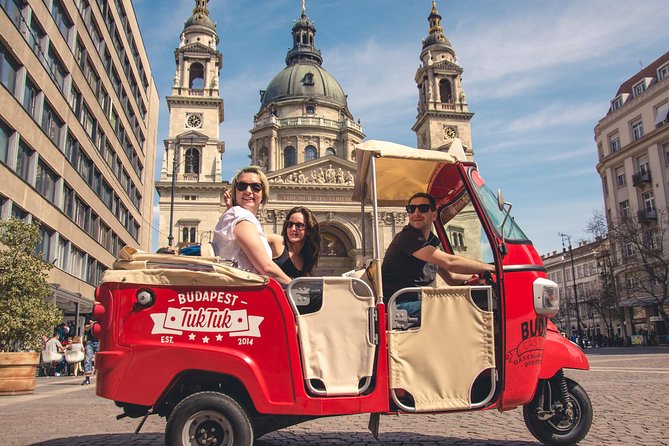
Budapest’s Danube moments are what make the city feel like a movie set. This tour treats the river like a storytelling line—bridges, viewpoints, then a memorial that hits hard.
Liberty Bridge and the bridge name you can remember
You’ll stop at Liberty Bridge, connecting Buda and Pest and described as the third southernmost public road bridge in Budapest. It was originally named the Franz Joseph Bridge, which is a useful bit of trivia when you’re staring at the structure and trying to understand why it exists.
Gellért Hill area and the thermal-bath zone at Hotel Gellért
You’ll also see the Gellért Thermal Baths area, part of the Hotel Gellért in Buda. If baths are on your itinerary, this stop helps you understand the “where” before you decide which bath to book.
Citadella and the Freedom Statue viewpoints
Next up: Citadella on Gellért Hill—the citadel fortress used in Budapest’s military history. Then you’ll reach the Liberty Statue (Szabadság-szobor), commemorating those who sacrificed for Hungary’s independence, freedom, and prosperity.
Good move: ask your guide for the “why this hill matters” story. Hills aren’t just views in Budapest—they’re power points.
Garden of Philosophy: a calmer viewpoint with a symbolic angle
You’ll also see the Garden of Philosophy, described as having fewer tourists and offering a wonderful view. One specialty mentioned is a group of philosophers where Jesus Christ and Buddha meet on a pedestal, meant to encourage understanding.
This stop is very short (about 5 minutes). If you want photos, stand where you can capture both the garden element and a broader Danube view.
Shoes on the Danube Bank: history you can’t ignore
After the Buda-side viewpoint time, you’ll get to Shoes on the Danube Bank, a memorial created by film director Can Togay with sculptor Gyula Pauer. It honors Jews killed by Arrow Cross militiamen during World War II.
This is one of those stops where a good guide matters. You’ll likely feel the weight fast, and you’ll also understand that it’s meant to make the loss personal and immediate.
Castle District highlights: Fisherman’s Bastion, Matthias Church, and Castle Hill
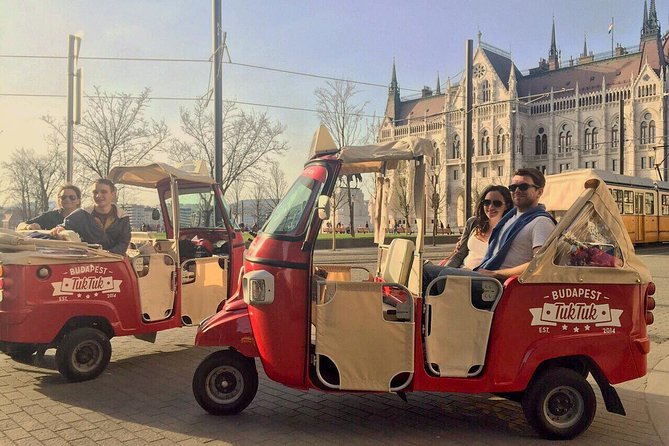
The Castle District is where Budapest looks most postcard-perfect—and where it helps to have time for angles, not just monuments.
Castle Hill: UNESCO plateau and the thermal cave network
You’ll be in the Castle Hill area, described as a limestone plateau about 170m above the Danube, about 1 kilometer long, and part of a UNESCO site. One especially cool detail: a 28 km network of caves formed by thermal springs runs below this area.
Even if you don’t go into caves today, understanding that “below the view” there’s more Budapest makes the neighborhood feel layered.
Fisherman’s Bastion: neo styles and viewpoint payoffs
Fisherman’s Bastion (Halászbástya) is a terrace near Matthias Church with neo-Gothic and neo-Romanesque styling. It was designed and built between 1895 and 1902 on plans of Frigyes Schulek, so it’s not ancient in the way you might assume. It’s beautiful for a reason anyway: the views over the Danube are the whole point.
Drawback: expect that it’s a photos-and-looks stop, not a deep architectural museum visit. Time is brief (around 10 minutes).
Matthias Church: tradition, style, and the limits of archaeology
You’ll also see Matthias Church (Mátyás-templom) at the heart of the Castle District, in front of Fisherman’s Bastion. The tradition says it was originally built in Romanesque style in 1015, though no archaeological remains exist—so part of the charm here is also the mix of tradition and historical uncertainty.
Tip: if you’re sensitive to crowds, go into this expecting busy angles near famous viewpoints, then use the tuk-tuk mobility to reposition.
How the “private” part feels: pacing, photos, and group size math
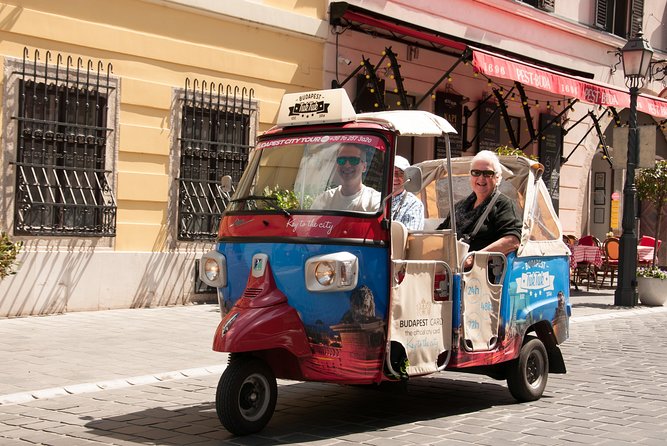
This tour is private, meaning your group rides together (or splits into more tuk-tuks if needed). One tuk-tuk is comfortable for 2–3 people, and if your group has an odd number, you should specify whether one person should ride in another tuk-tuk.
That size detail changes the “value” in a big way. If you’re traveling solo or as a couple, you may feel like you’re paying a premium per person compared to shared tours. If you’re traveling as a small group, it can feel more fair because you’re buying freedom: fewer waits, more control, and a guide who adapts to your pace.
Expect lots of photo moments (and ask for them)
The strongest positive reviews mention photo help and guides taking great pictures for clients. When you get your first stop, tell your guide what you want: architecture-only photos, wide Danube views, or fewer photos with more time reading the stories.
Comfort: blankets can help, but vibrations are real
Some people love the ride in cold weather because they were provided blankets. Others have said the motion can be jarring and can make it hard to hear the guide. For best odds, sit where you’re comfortable, keep an eye on volume, and if you’re prone to back pain, be ready for a more bumpy ride than a smooth car.
Flexibility is the real perk
A recurring theme in the best experiences is that guides adjust the route and pace. That’s what turns a list of landmarks into a coherent day. If you have a must-see order—say Basilica first, synagogue second, Castle District last—share it early so your guide can structure the timing.
Price and value: is $178.98 per person worth it?
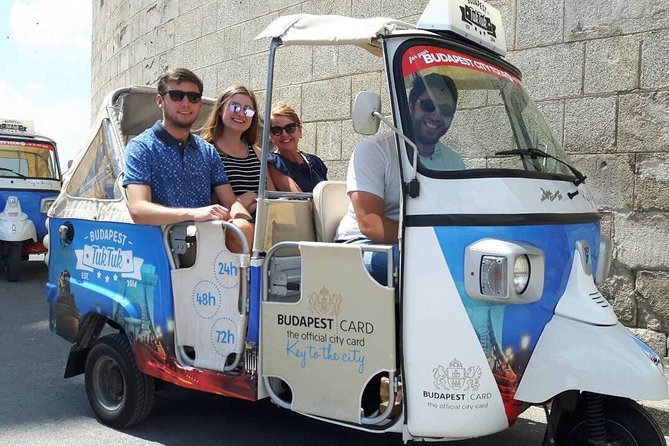
At $178.98 per person for about 4 hours, this is not the cheapest way to see Budapest. But private tuk-tuks aren’t priced like budget transport because you’re paying for three things: direct access, time efficiency, and a guide who can adapt.
Here’s the value equation I’d use:
- If you want major sights across both districts without spending hours walking and transferring, you’re buying time.
- If you care about interpretation—why Andrássy Avenue is significant, why a memorial exists, why the Castle District is more than one landmark—you’re buying context.
- If you’re a group who can fit comfortably, it can feel easier to justify than a per-person shared tour once you factor in how often shared group days become rushed.
What lowers value: entry tickets aren’t included, and most stops are outside. If you’re hoping for lots of indoor access (beyond quick exterior viewing), you’ll need to budget extra on your own.
Should you book this Budapest Private Tuk Tuk Half-Day Tour?
Book it if:
- you’re on a first visit and want a quick city orientation fast
- you prefer a private format over crowded buses
- you want to see both Buda and Pest in one half-day with a guide explaining the meaning behind the landmarks
- you enjoy photo-friendly viewpoints and don’t mind short stop times
Skip it or plan differently if:
- you strongly need many indoor entrances during the half-day (this ride is mostly exterior-focused)
- you’re very sensitive to sound or motion and know tuk-tuk rides don’t suit your body
- you’d rather spend more time in fewer neighborhoods than cover a lot of territory
If you do book, I’d treat the tour like your “scouting mission.” After this, you’ll know exactly where to return—whether it’s the thermal baths, the synagogues, the market area, or a longer Castle District wander.
FAQ
FAQ
How long is the Budapest Private Tuk Tuk Half-Day Tour?
It runs for about 4 hours.
Is the tour private?
Yes. It’s a private tour/activity with only your group participating.
Do I get pickup and drop-off?
Yes. Free pick-up is offered in the wider downtown area, and free drop-off is included as well.
Is the guide available in English?
Yes. The tour is offered with an English-speaking guide.
Are admission tickets included?
No. Entry tickets are not included.
Do I get to choose the departure time?
Yes. There are choice of departure times throughout the day.
Is a Danube sightseeing cruise included?
It can be included if you select the option for the Danube sightseeing cruise.
What happens if the weather is bad?
If it’s canceled due to poor weather, you’ll be offered an alternative date or a full refund.
How many people fit in one tuk-tuk?
One tuk-tuk is comfortable for 2–3 people. If your group has an odd number, you can specify that one traveler should ride in another tuk-tuk.